
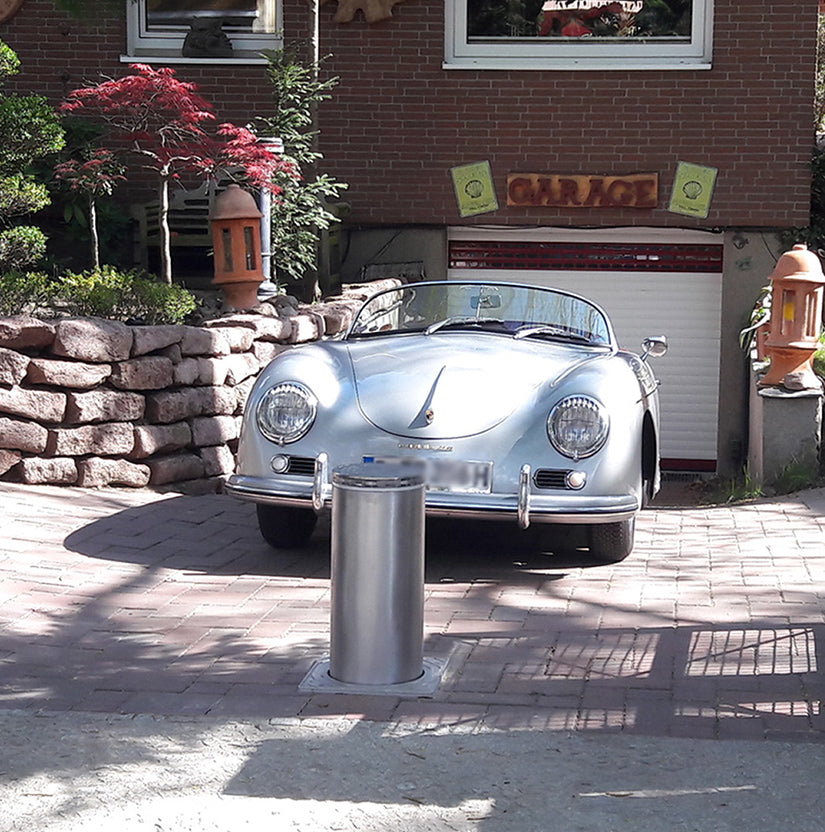
A silver Porsche 356 in front of the garage, behind it clinker brick, a natural stone wall, two lanterns and a stretch of paved driveway that fits perfectly into this picture. What is missing from the photo was the problem for years: strangers' vehicles blocking the courtyard when guests or suppliers came – and a classic car standing openly in a driveway is an invitation as well. Since a single retractable bollard made of stainless steel V4A (316) from Braun Antriebe has been installed at the narrow point, both issues are settled. We do not say where the house is.
Two problems, one bollard: unauthorised parking and theft
The first problem was the everyday one: anyone unfamiliar with the driveway sees it as a convenient place to stop, turn or briefly park. From the street you cannot see that someone behind needs to get out of the garage. The second problem relates to the car itself. A Porsche 356 does not disappear through a keyless-go trick but the classic way – loaded up, pushed away or towed. Anyone planning that needs a vehicle that can drive right up to the car. That is exactly what is no longer possible when a stainless steel bollard stands in the middle of the driveway.
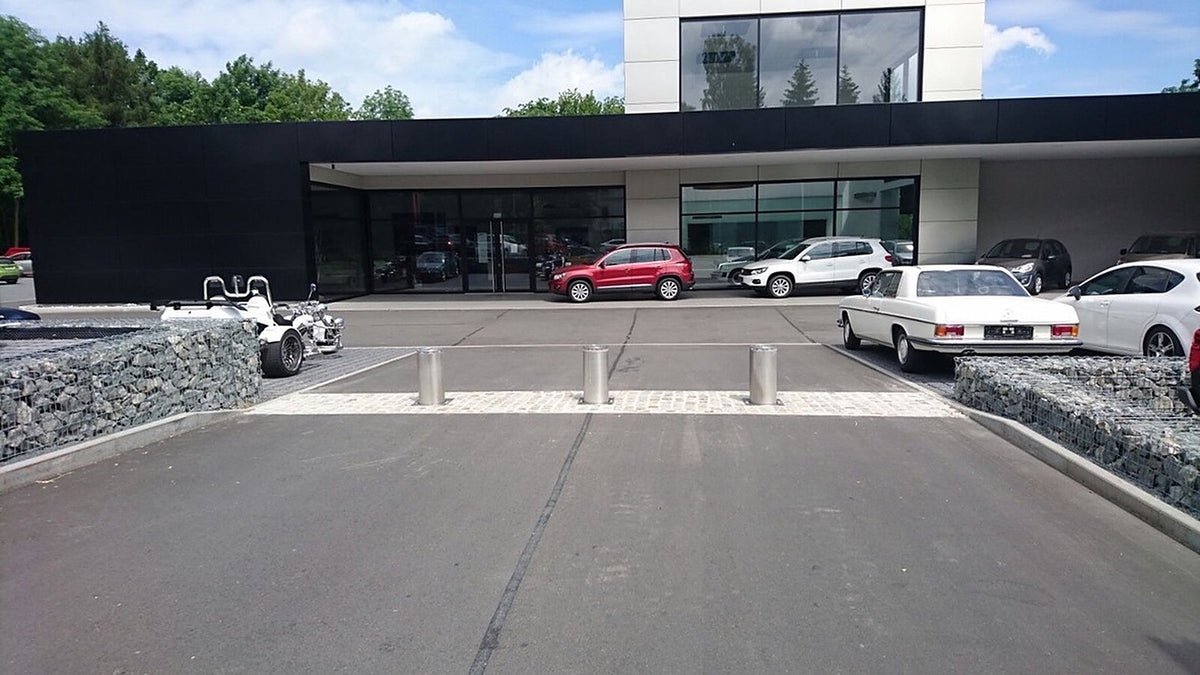
The bollard sits at the point where the driveway is narrowest between the wall and the property boundary. When lowered, only a round stainless steel lid lies flush in the paving; when raised, the passage is closed to any car, while pedestrians and bicycles can pass on the left and right.
“When we don't need the bollard, it is in the ground and doesn't give the impression of a barrier. As soon as it is raised, nobody blocks our driveway any more. It's reassuring to know that our car and our courtyard are now protected.” – the customer after installation
Why a bollard and not a gate?
A gate would have had several disadvantages at this driveway. A swing gate needs room to swing open, which the driveway between wall and garage does not have. A sliding gate needs a track and a parking position next to the opening. And both change the look of a house on which work has visibly been done with great attention to detail – clinker brick, natural stone, lanterns, Japanese maple. The bollard, on the other hand, is invisible as long as it is not needed, and when raised it is a simple stainless steel cylinder that suits the rest. That was important to the customer, and it is why we almost always recommend bollards for private driveways. You will find the detailed comparison in the guide Bollard, barrier or sliding gate.
LED ring, V4A and compressed air: what is in the ground
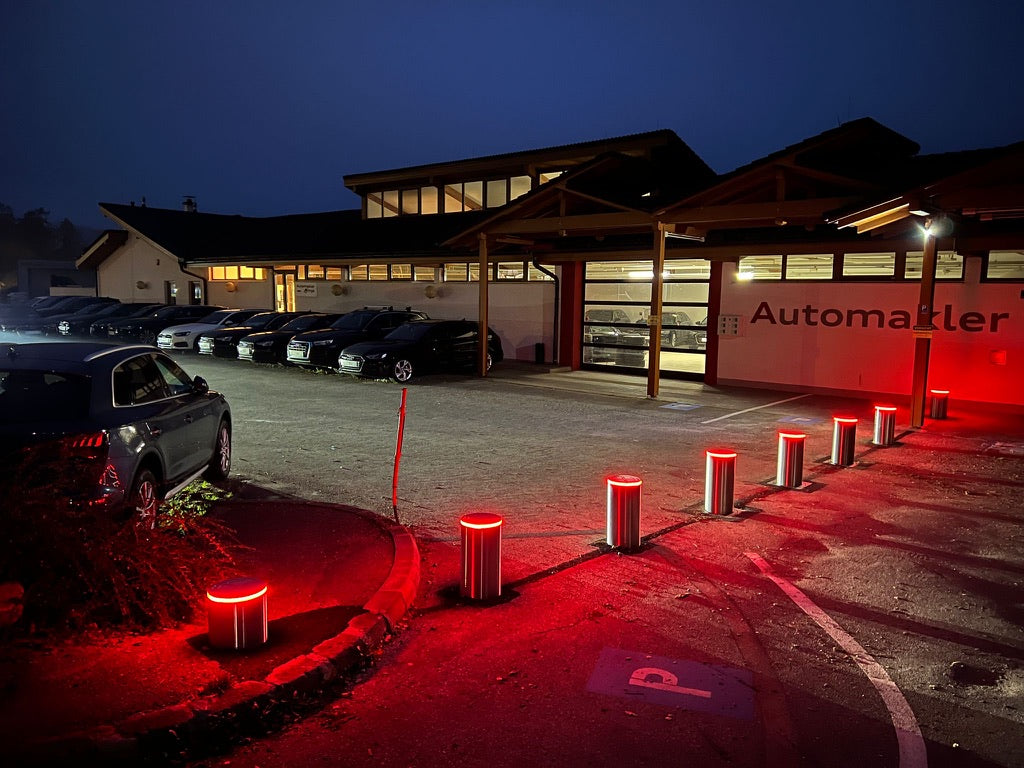
The installation is a pneumatic retractable bollard made of stainless steel V4A (1.4571), brushed, with an LED light ring under the lid plate. At night the ring marks the barrier without dazzling – the customer calls it “a stylish atmosphere”, we call it safety: anyone turning into the driveway in the evening can see immediately whether it is clear.
- Only a cylinder in the ground: the compressor, valve and control unit are in the garage. In the bollard itself there are no electronics, no heater and no drain that could silt up.
- Sealed to IP69: rain, leaves, road salt and the pressure washer when cleaning the courtyard are no issue for the bollard.
- Operated from the car: for private driveways, the bollard is usually lowered by radio transmitter, so nobody has to get out. On request also by mobile phone call, number plate recognition or smart home.
- Very low-maintenance: the customer describes the surface as easy to care for – “no worries about dirt or blockages”. If something does need replacing after years, it is the compressor or valve in the garage, not the bollard in the paving.
Why we rely on compressed air instead of electric spindles or hydraulics for driveways is explained in our drive comparison.
Installation in the paving
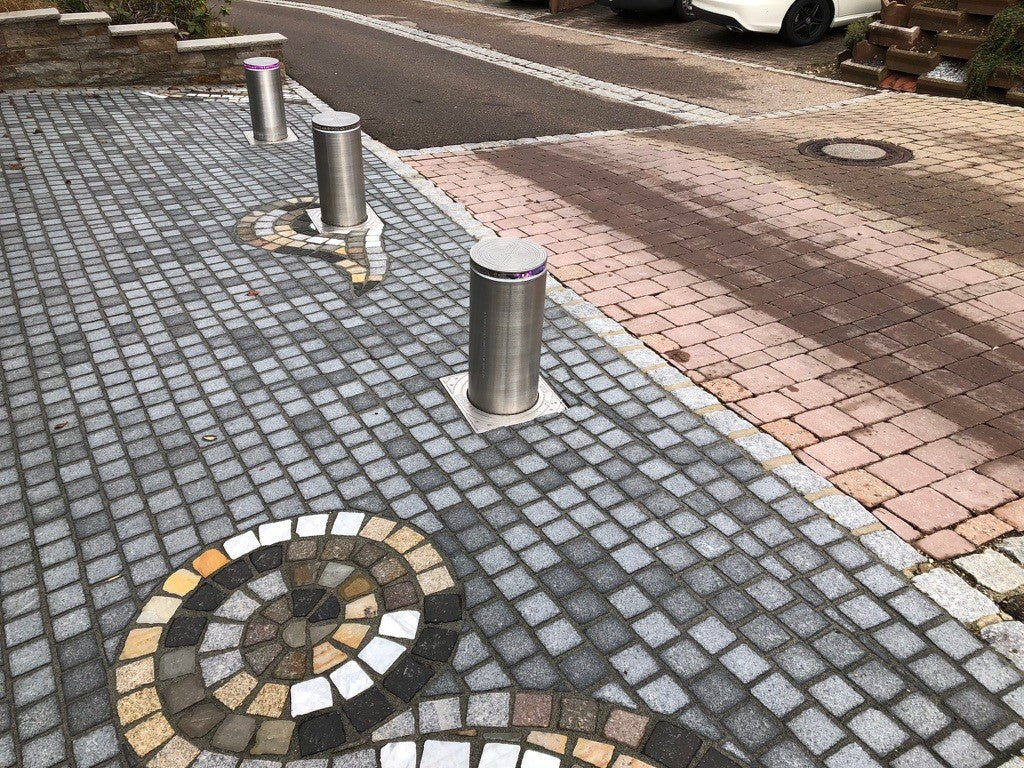
As the customer describes it, installation was straightforward: lift the paving in the area of the bollard, set and align the sleeve, run the line bundle into the garage, close the pit with compacted sand, put the stones back. The bollard does not need concrete. Our reference Retractable bollard in granite paving – fleece, sand bed, no concrete shows what this looks like in detail, with photos from installation to finished paving.
What classic car owners can take away from this
Three things from this project apply to almost any driveway with a valuable car. First: theft protection for a classic car means above all that no other vehicle can get close to the car – a single bollard at the narrow point is often enough for this. Second: the barrier must be able to disappear, otherwise at some point it will no longer be used out of convenience or for looks. Third: plan for operation from the car so that the system is used every day, even in rain and in the dark.
More on the topic on our pages Classic car theft protection and Unauthorised parking; the basics for private properties are covered in the topic page Protecting driveway, parking space and vehicle.
Do you want to secure your driveway and your car?
Send us a photo of the driveway via WhatsApp to +49 172 4544485 or call us on +49 40 226390411. We will tell you whether one bollard is enough, where it should sit and what installation costs. We manufacture the bollards ourselves in Seevetal near Hamburg and support the installation via WhatsApp. You will find our standard bollard as the barrier bollard stainless steel V4A, and all models in the overview retractable bollards made of stainless steel V4A.